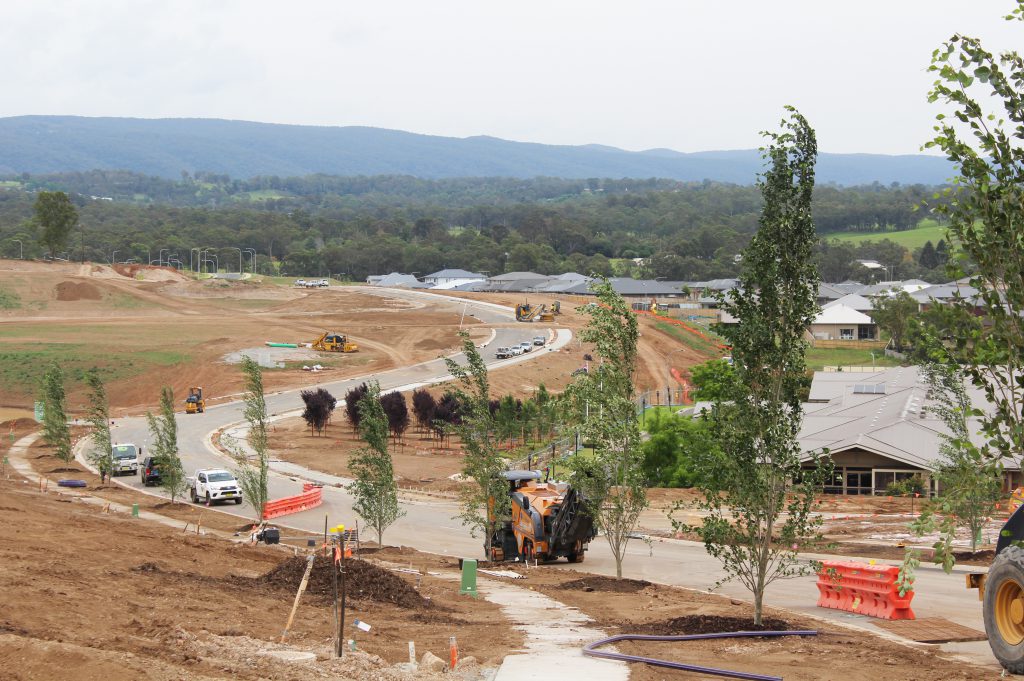
12d Water Resources Engineer Rob Graham is our ‘go-to guy’ for all things Drainage 2D. Watch this video to hear him talk about this exciting aspect of 12d Model!
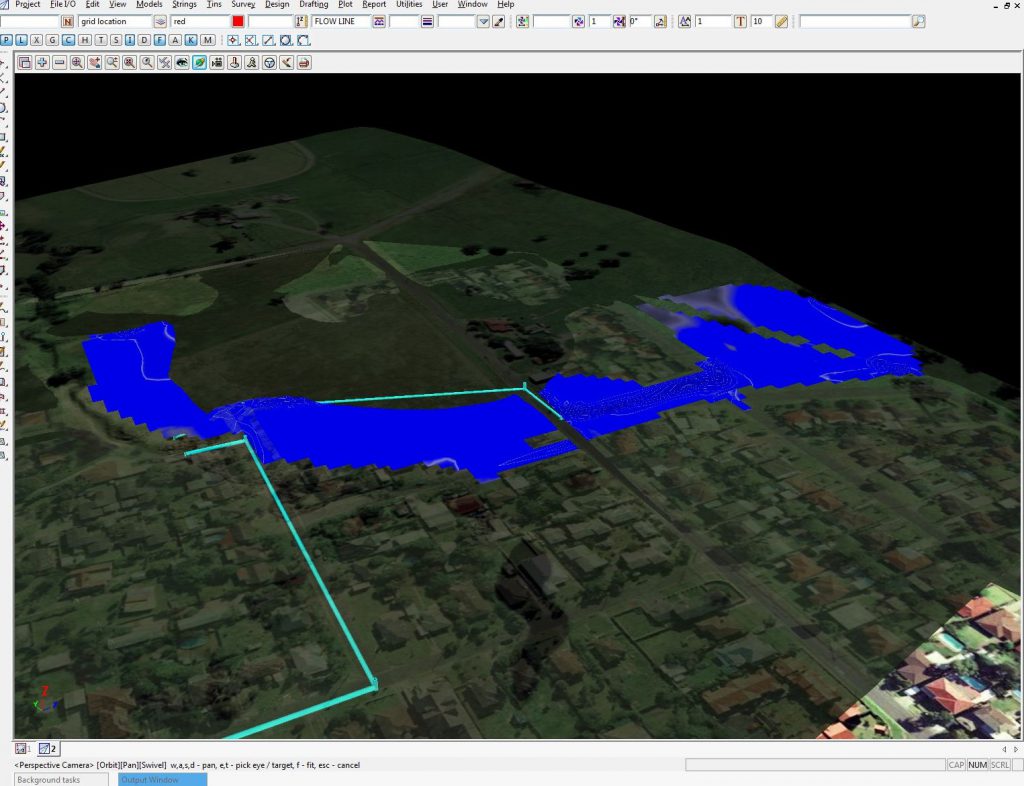
Stormwater overland flow is a critical component of roadway design. Estimating flow paths through intersections and roundabouts can be difficult, especially under complex diverging flow conditions. 2D hydraulic modelling provides the modeller a more advanced tool for evaluating the surface flow patterns. Conventional 1D modelling requires the modeller to define the flow routes based on evaluation of the terrain and estimated flow direction (water does not always flow downhill and has a reluctance to turn corners).
In this introductory session, we use 12d Model to create a small 2d hydraulic model of a roadway intersection, run the TUFLOW engine and review the velocity, depth and hazard results. The visualisation of the results are in plan, section and 3d animation.
We caught up with David Healy – Senior Design Engineer, J. Wyndham Prince – who has been with the firm for about nine years, and in the engineering industry for about 16 years. David has been using 12d products for 14 years, across a broad range of road and drainage projects.
He and his team decided to enter the 12d International Innovation Awards 2018 because they were proud of a 12d Model macro they’d written and thought they’d see what others thought of it…and our judges confirmed just how great this macro was, by awarding them first prize in the Customisation category!
Innovation, to David, means taking something that exists and making it better, redefining it to make it more efficient – saving time is crucial for their busy firm, so anything they can do to innovate in that regard, while maintaining their high standards, is always a priority.
The main problem they had as designers was the initial set-up process – defining kerb returns, applying MTFs, etc. – which can be boring and tedious. Before the macro, the workflow involved doing all of this manually, as well as building road surfaces, setting up Chains, and plotting out PPFs. The main benefit of the solution was the time saved…designers could stay focussed on the design itself rather than on the set-up. One of their projects would have taken about 80 hours to set up, and with the macro, took just two!
This macro has given J. Wyndham Prince the capacity to take on even more work for their clients, and the extra efficiency they’d always wanted.
If you’d like to read more about how they achieved this, simply enter your details to receive the full case study as a PDF (link coming soon)!
12d Model Programmer Hanh Cao addressed our 2018 Technical Forum audience about Clash Detection in 12d Model.
12d Model 12 – Supported Data
Services
Pipelines
Water Nodes and Links
Trimeshes
TINs (v14)
Menu
BIM -> Check/clash -> Clash detection (then Detection or Rules)
Rules
Hierarchical
Under ‘Clash Rule Sets’, each set of rules (with its individual rules following) is laid out. Services covered include Water, Electricity, and Gas.
For each individual rule, name and description can be set, as well as parameters such as For (Dynamic) and Against (Static) Data, Link/Pipe clearance, Node/Pit clearance, Trimesh clearance, and TIN above/below clearance.
Panel
The panel itself is quite simple – just a For and Against Data Source with no overlap, rules and output models, and report types to set.
Data Selection for Each Rule
Data is selected using Model -> Name (requires a good naming convention)
‘For’ set is selected first
‘Against’ set is selected second
Any overlap with the ‘For’ set is removed from the ‘Against’ set
Tolerances are applied to the ‘For’ set
The rule is to check ‘For’ vs ‘Against’
Clash Checks
Two kinds – Direct Clash or Tolerance Violation – i.e. creating a ‘buffer’ around objects using rules and then checking whether any other objects violate that tolerance.
With over 600 videos from our uploads alone, it can be hard to figure out what to watch! Not to mention how to find what you’re looking for!
By placing videos in playlists, and including some other videos we think you’ll enjoy, we hope to help make this task a bit easier for our users. There are so many things you can do with 12d Model software – these categories can help you figure out where to start learning!
I caught up with Owen Thornton of 12d Queensland to chat about his best tips for the Plot Paramater File (PPF) Editors in 12d Model software.
This webinar video demonstrates some of the Public Works PPFs which 12d has developed for 12d Model 12 and beyond.
It also explores customising plotters, colours, plotter mapping files, etc., to produce PDF plots directly out of 12d Model, very quickly, building up a drawing set as an array of 12d plot models (before creating PDFs or DWGs).
It’s not often we at 12d Solutions get to travel ‘just down the road’ to see 12d Model in action – most of the projects we’ve seen it used on over time have been a fair distance away from our Northern Beaches location. But in recent times, that trend has changed a little.
In February, our Managing Director Dr Lee Gregory caught up with Campbell Blogg – General Manager of ESO Surveyors to chat about – among other topics – what it’s like to be able to concentrate some efforts on local road projects instead of travelling to the other side of Sydney, and around the rest of Australia.
ESO Surveyors first started using 12d Model software all the way back in 1997. When 12d Field was introduced to the product, they took this module on with enthusiasm, and have been loyal users ever since.
Campbell said, “When I came to ESO they were using 12d Model for roadworks and civil. When I came on board, I brought the building sites as well, and on the building sites we remained using other CAD packages…and over time we transitioned everything into 12d.”
ESO Surveyors currently has around 65-70 staff, so – like 12d Solutions – It has grown a lot over the years, having begun with just a handful of surveyors. They keep a support network of four-five people in their Frenchs Forest office, and the rest of their staff members tend to be surveyors, working on site or out in the field.
The breadth of the types of jobs ESO Surveyors is involved in is huge – Campbell told us, “We’ll do anything. We’ve been exposed to rail, buildings…most of our work is roadworks. We’ve done wind farms, we’ve done solar farms, we’ve done bridges. We can turn our hand and our experience to most things. We’ve got offices now in Brisbane, Melbourne, Adelaide, and here in the Northern Beaches of Sydney, of course.”
Of the changes that have occurred in ESO Surveyors (and indeed the surveying industry in general), Campbell said, “There was a period when we went from two-person teams down to robotic and one-person teams quite quickly. During that transition, there were a lot of unhappy surveyors because they had to then do most of the manual work, but that’s just the way the industry evolved. It’s an unfortunate side effect. It’s always nice to have an assistant to help. But that’s just the way it went.”
As a firm, ESO Surveyors has embraced technology in everything they do, with the ever-present goal of becoming more efficient…and their many and varied clients see the benefits of that. With 65 people, they are essentially doing the work of what might have been 180 people, say, 15 years ago.
Said Dr Gregory, “It’s been great to have ESO working with us for so many years – you were one of our very early customers on the surveying side – and seeing the changes, and as you said, you were using other software for some parts but over time have totally transitioned over to just 12d Model with 12d Field.”
Campbell agreed, “It’s been good to be involved for so long with 12d Solutions – also a Northern Beaches company – and to see how both companies have grown together. The people 12d has in Frenchs Forest and Warriewood have been great support over the years.”
Lee also caught up with Greg Cech from ESO Surveyors, who is currently employed as the Survey Manager on the Northern Beaches Hospital road infrastructure job. Greg has been on that project for two and a half years, and it was going for approximately a year before he started. All ESO’s work on this project is being done in 12d Model with 12d Field.
Greg confirmed what an exciting project this is to work on, and told us a little about the masses of infrastructure underground – services and such – which of course slowed down the apparent construction for a few months, even though the actual construction was still going on underneath. He said it’s getting to a particularly interesting point from a public perspective as bridges are now being constructed, so people coming past will be able to see the bridges, as well as the slot, which is also starting to be constructed and will be a big visual enhancement in the space. The ‘slot’ is what will come out from Wakehurst Parkway; colloquially it may be known as a ‘tunnel’, but that’s not the technically correct term. Greg told us that it’s actually literally a slot that goes up to about eight metres deep, and the east-west through traffic will run in the slot. Local traffic will run up above it.
During the earlier phases of this project, there were massive disruptions to traffic through the area, but it’s now flowing much better than before. Greg said he hopes it will only get better as they get more and more lanes open up to through traffic.
All in all, a very exciting project, and one we’re proud to say 12d Model and 12d Field are being used for!
Warringah Road
In addition to that important local project, ESO Surveyors is currently involved in the duplication/upgrade of Mona Vale Road, and they’re using 12d Model and 12d Field on that project, too.
Greg said, “We’ve started that only recently, and that looks like it will be an interesting project in amongst all the bush there.”
One of the most important aspects of that project, Greg said, is being completed by the teams in charge of finding safe and secure ways to pull down large sections of rock, and to keep the traffic flowing – there are some unique challenges involved in a project like this! Due to noise restrictions, they tend to have to work during the day, so there are added challenges there – lane closures and such – but the long-term benefits to the area will be huge.
Campbell, too, is pleased that the Northern Beaches area now seems to be such a hub of activity after so long without significant local projects (the B-Line being the only notable exception). Lee agreed, stating, “I don’t have to go so far to say hello (not to mention to see the benefits of these great enhancements to our local area)!” Both are interested in how things will continue to progress as the proposed tunnel under the Spit Bridge comes into fruition.
Campbell added, “It’s definitely nice to be able to drive through project and check it out without taking three hours out of my day! And I really enjoy knowing that we’re helping our local community, contributing something important to the area we know and love. It’s great to see progress happening locally, and to be a part of that.”
ESO Surveyors was originally based in Harbord (now Freshwater), but has now been based in Frenchs Forest for about eight years. They find it to be a more central location. It’s a bit closer to the arterial roads, so it’s a bit easier to get to the projects, and for Campbell it works particularly well because it’s only seven minutes from his home!
Lee commented, “It’s fantastic to see Australian firms grow and take on more and more of these big jobs as well, rather than just overseas companies. We’d like to congratulate you on your fantastic journey so far, and may you double again!”
Campbell responded, “We’re looking forward to the next 10 years – there’s a fair bit on, so we hope to keep growing.”
12d Solutions – another local firm – can trace a similar path of growth over time. In 2016, we celebrated our Silver Jubilee Anniversary…at the time, we shared this update:
1991…Nirvana released ‘Nevermind’, ‘Terminator 2’ graced cinemas, Pierre-Gilles de Gennes won a Nobel Prize for Physics…and 12d Model (then 4d Model) was released!
From humble beginnings in the basement of the Gregory household, 12d Model has evolved over the last 25 years into being a market leading product throughout Australia, and we at 12d couldn’t be prouder.
Two young men – Dr Lee Gregory and Alan Gray – had a vision back in the late 80s/early 90s when they started this process…they wanted to help civil designers save time and money by offering them software which was easy to learn and use, and which would allow them to design everything they needed to in one place – a concept planning tool. In the years that have passed, 12d has continued to expand on that goal to include detail design, highway design, surveying, 12d Field, urban drainage, Drainage 2D, visualisation and 12d Synergy, and to expand the team that helps make that happen. It just goes to show that when great people make great products, great success can be enjoyed by all involved!
Our 2016 Conference marked the Silver Jubilee anniversary of the release of 12d Model, and we were very excited to share that momentous occasion with many of our wonderful users. We’ve since held our largest event to date, the 2018 12d Technical Forum – with well over 500 attendees – and are in the process of putting together our 2020 Technical Forum (to be held back in Brisbane, from 2-4 August 2020 – registrations are open!
I caught up with 12d Field Product Sales and Marketing Manager Graham Wirth to chat about Combined 12d Field.
This presentation reviews the improvements made to 12d Field in 12d Model 14.
Setout and Pickup have been combined into the one package to give the user more functionality, combined with a simpler user experience for all your survey needs.
Pickup’s new format enhances the user’s ability to manage complex string or point Attribute input to suit the needs of your clients. Setout has new functionality to further improve your productivity on site.
I caught up with Graeme Winfield of 12d Queensland to chat about some of the basics in 12d Model for Design.
In this video, Graeme covers such topics as:
Overview of 12d file and folder structures
The Design process
Survey data
Creating designs
Resolving 12d Model startup problems
Where to get more information
Catch up online today if you missed the live session!
Detailed Alignment Design adds another dimension to 12d® Model™, providing the tools to carry out the full range of civil design work, from land development to multi-lane highways with major intersections and exits.
Contact your local 12d Sales Team today for more information!
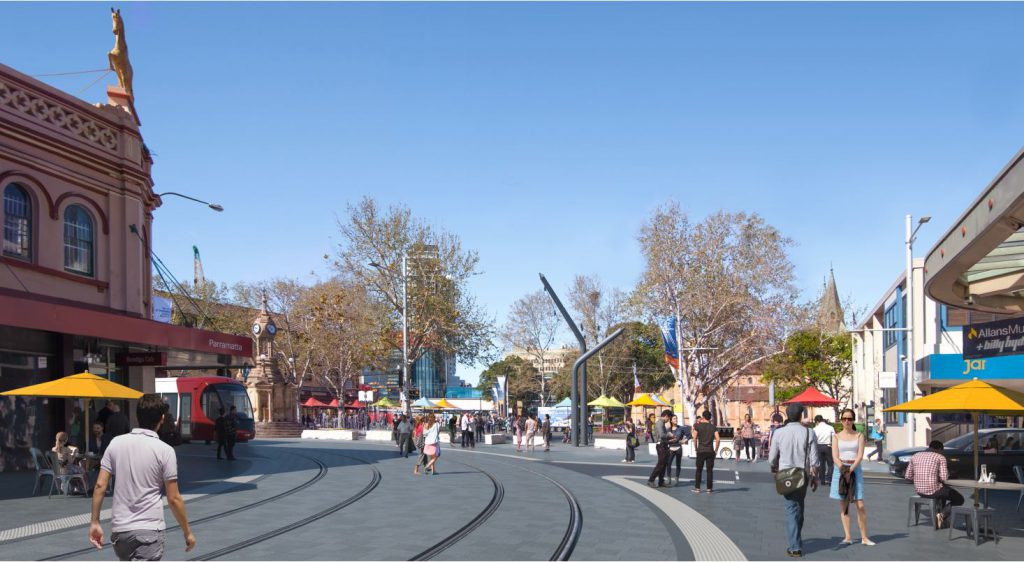
Arup Sydney’s entry in our Innovation Awards last year was truly fantastic. On the Parramatta Light Rail (Stage 1) project, they utilised 12d Model in innovative ways, bringing in all manner of applications not often seen before. The project worked on lots of different areas around Parramatta, requiring a lot of different solutions, and involved not just the design/construction of the light rail itself, but the enabling works that allowed the light rail to be built. In one section, they even needed to change a one-way street into a two-way street. It was a complex, multi-disciplinary project, and finding the right collaborative solution was essential. They spent time at the outset working this out, to great benefit.
We caught up with designers Jarred Dickson and Danny Wilcox to chat about their entry, which they submitted “to showcase the innovative things [they] were doing on the project,” and how this innovation helped the project.
To their team, ‘innovation’ meant ”doing something different”, “pushing the boundaries”, and finding new ways to do things. They did a lot of design verification checks – turning paths, sightline checks, etc. – in 12d Model (rather than externally as is usually the practice); this meant these aspects of the project could be in 3D rather than 2D as was previously the norm, and these could be reviewed as people were working on the design, rather than having to do this only at the end and having to go back and do rework. One of their favourite things about this was that 12d Model acted as a collaborative tool among all the different disciplines – it was the one true source model.
‘Digital Engineering’, to Arup, means doing everything digitally in one place. In the past, only half the design was in 3D and the rest was in 2D. On this project they only needed one drafter, and even she was working with them inside 12d Model. This meant not having to do much on paper at all. Collaboration meant everyone was working with the same tools, live. Not only did this benefit the team, the client (Transport for NSW) saw the benefits and was very pleased with the results. The team at Arup is confident that the time they spent setting this up will mean greatly improved efficiency across their future projects.
Danny told us that their previous workflow ‘would make a mess of a whiteboard’ – going back and forth between CAD and 12d Model, and with other disciplines (road design, structures, landscaping, urban design, etc.)…the old processes were very manual, very much on paper, and full of reviews and redesigns. Having it all in the model alleviated this, and the review process was so much easier – it could be done along the way, in 12d Model, visible in one 3D space. They thought there might be some resistance to this process being wholly digital, but actually the client was thrilled when they saw how much more efficient it was.
4D, 5D, and even 6D BIM came into this project. One section of roadworks had a very complex structure for a road widening, and they were able to create a full 4D design of how this road could remain open while the construction occurred, to minimise disruption in a busy area. Being able to increase efficiency (and reduce errors) in this regard allowed the teams to save a lot of money on this project. Future projects will also be more efficient through following the methods devised on this one.
MTFs, Snippets, and macros were some of the 12d Model tools that assisted these processes. Smart Snippets automated and streamlined the design process by enforcing the way things were modelled for consistency across the project. Danny mentioned that “the way 12d is set up to allow you to customise in-built panels with macros is pretty cool.” He said this project allowed them to take this kind of thing ‘to the next level’. The team also benefited from using Chains, because this gave them a way to describe new tools to others, and lay down how things work (including naming conventions) so the whole team can be ‘on the same page’. They can now bring these Chains into any project.
Vehicle Paths and Sight Lines computated within 12d Model have also been a new development – they used to be done in CAD, and this new method revolutionised processes. Trees, signage and more could be included in the 3D model. A register within 12d Model made this much easier to manage. For those who have trouble imagining 2D plans in 3D, this was incredibly helpful. Different ways to present utilities were devised, and these will be applied on many other projects over time.
The plan moving forward is to share these lessons and skills with others in the company – the small team involved in this project will be sharing ideas through the rest of Arup on Design Verification, Smart Snippets, and more.
This innovative work has set the standard for others to follow in future projects – this team has really ‘set the bar’, not just within Arup, but for the industry as a whole.
In this popular webinar video, Tim Brooks of 12d Queensland looks at using various Computators in 12d Model Super Alignments, and how these are used to create a more dynamic design.
Computators are used to link Alignments together. In Conjunction with Super Alignment Computators, Tim demonstrates how putting these into a Design Chain can significantly improve design project efficiency.
This presentation was produced in conjunction with one by Peter Taynton, also of 12d Queensland, about the Element Method and Super Alignment.
Contact us today on training@12d.com with your ideas for future 12d webinar topics!