Way back in 2005, when we first began hosting the 12d Tech Forum (which was then called the 12d User Conference), we had no idea the event would have such success and longevity.
In 2005, we were thrilled to have the support of 291 12d Modellers joining us in Brisbane at the Convention and Exhibition Centre (BCEC) we’ve come to think of as a second home. Back then, the Centre itself was much smaller, too!
Flash forward to 2024 and we were not only in a bigger section of BCEC – the Boulevard Level, which we’ve used for our events since 2012 – but we’d sold it out completely! Over 630 delegates moved around those hallowed halls over the three days of that event, and we could not have been happier.
And now, as we prepare for our 2026 event, we’re so excited to be moving into an even bigger space – upstairs on the Plaza Level…and to be celebrating the 21st birthday of our event!
We’d love to see you there to celebrate the 12d Tech Forum ‘coming of age’ – register through 12dtechforum.com today!
Before installing 12d Model, it’s helpful to understand how its licensing system works. This video gives you a clear and simple explanation of the different dongle types you may receive after purchasing your license.
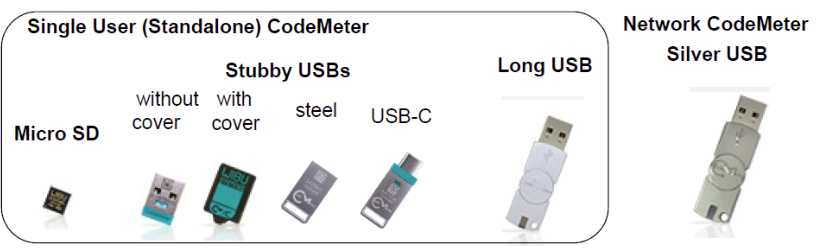
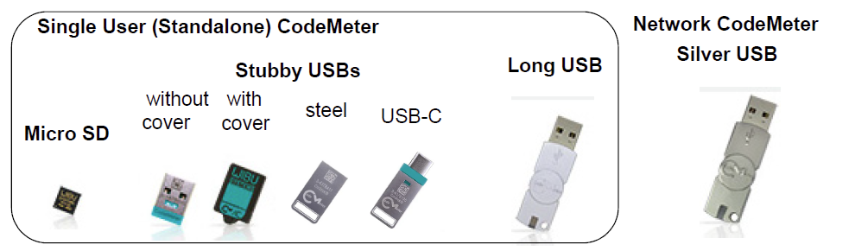
Upon purchasing a 12d Model licence or licences, you’ll usually receive: a standalone Codemeter or a network Codemeter dongle (or both).
Standalone dongles come in several forms such as an SSD card, a stubby USB, or a long USB drive. While they may look different, they all serve the same purpose. These are designed for individual users and allow access to multiple projects, with the option to be shared when needed.
For team environments, a network dongle is used instead. This is typically a heavier metallic USB device, where each license allows one user to access a project at a time, making it suitable for shared organizational use.
By the end of this video, you’ll have a clear understanding of how each dongle type works and which one applies to your setup.
Watch the full video to get a simple, visual guide to 12d Model dongle types and licensing.
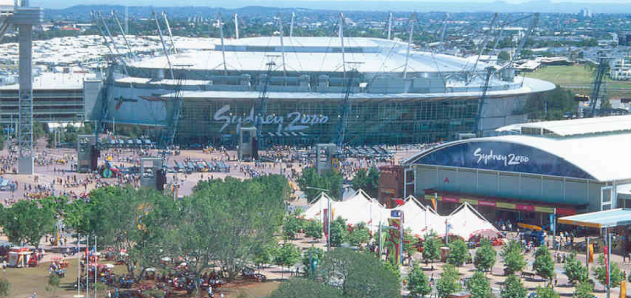
For the Millennium project at Sydney Olympic Park, contractor Graham Wirth and Abigroup (now Lendlease – https://www.lendlease.com/au/) leveraged advanced 12d Model technology to deliver precise on-site quality assurance for the construction of Australia’s largest indoor sports and entertainment arena in NSW, Australia.
On-site quality assurance checking of all steps in the construction of Australia’s largest indoor sports and entertainment centre is being carried out through 4D Model (later renamed 12d Model).
Architectural and engineering service models are being fed on-site into a 4D survey model to ensure that construction of the Multi-Use Arena at Sydney Olympic Park, Homebush, goes exactly according to plan.
The Multi-Use Arena is being designed and built by construction giant Abigroup Contractors. As well as being a key venue for the Sydney 2000 Olympic Games and Paralympic Games, it is expected to meet Sydney’s sporting and entertainment needs well into the future. Abigroup will operate the facility for 30 years through its control of Millennium, the management company for the Arena.
The fully roofed Arena has a 48 x 75 metre event floor which is surrounded by five levels of seating which can accommodate up to 20,000 spectators. The performance space is free of columns, which provides an uninterrupted view from all seats. There is also a large rehearsal hall with retractable seating for 900. The Arena is adjacent to a 3,500 space car park, also being built by Abigroup, which will be shared by other facilities at Homebush Bay.
Abigroup’s Chief Surveyor, Graham Wirth, said the 4D Model software was rigorously tested in an on-site trial before the company committed to long-term purchase. “The software is being used for survey file management, calculations and storage of as-constructed information,” he said. “During the trial period we found 4D Model superior to other systems in terms of speed, file handling and ability to transfer data to and from other packages. It is now coping with a huge amount of data and performing admirably.”
Drawings and 2D files are supplied to the on-site surveyors, who put the files into 4D Model and convert them to 3D. The data in these files is compared with on-site survey information models built in 4D Model so that there are no possible clashes in the siting of engineering services, such as storm water grease lines and telecom lines, and structure positions, such as piling.
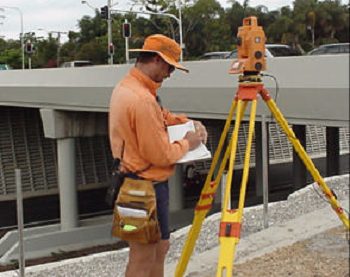
On-site survey information is collected using the TPSETOUT survey software package which links directly into 4D Model. TP-SETOUT records field data and compares the measurements to design parameters for setout and QA (quality assurance) purposes, then the data is compiled in 4D Model for quantity computations, data storage and transfer, and design modifications.
“The data is put together in 4D Model in layers, which is an excellent feature for visualisation,” said Mr Wirth. “Another good feature is the ability to use very long file names to enhance file management. “We are currently checking ground slabs in 4D model and are using around 30 layers at the moment for all our data,” he said. “We expect that by the time construction is finished in August 1999 this will at least double.
“4D Model is proving an excellent tool for handling very large project models. Our models currently contain about 60,000 to 70,000 points and this should at least double,” he said. “We’re confident that 4D Model will successfully see us through to the end of the project.”
In collaboration with the Environment Agency in the United Kingdom, Waterman Group utilised 12d Model to undertake a detailed flood risk assessment for a major 3,000-home development, streamlining complex data workflows, enhancing analysis precision, and supporting effective planning outcomes.
Waterman Civil & Transportation Group (WCT) was one of the original 12d Model software users in the UK and have finalised an initial study for a housing development of 3000 homes at Waterlooville on the South Coast of England.
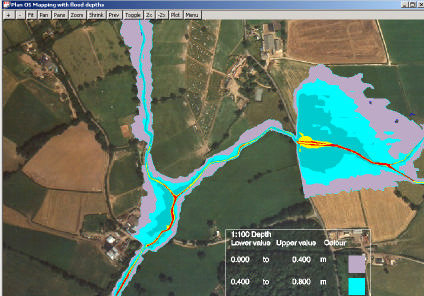
This study involved a detailed assessment of flood risk in the area. The Environment Agency had done rough flood outlines based on a 50m grid using the Flood Studies Report, but a detailed assessment was required for planning to determine the existing flood plain and to compare this with another ‘post development’ flood study.
For cost and speed, aerial photogrammetery was ordered to cover the entire site and local surveyors were used to locate the property boundary using traditional means. The resultant photogrammetery (dgn format) and boundary (dxf format) were merged into a single 12d digital terrain model of several hundred thousand points.
To obtain finer detail of the river and to verify the model of the plain, further detailed river cross sections were then surveyed. In the office, work began on building the HEC RAS project inside 12d Model.
After ensuring concurrence on hydrological methodologies with the local Environment Agency office, WCT carried out the back water hydraulic study. Graduate Engineer and 12d user Richard Russell said, “Using 12d with HEC RAS I was able to devote more time to sensitivity tests in HEC RAS and in 12d. I had the luxury of time to try different roughness coefficients and to test if ground cover picked up with the photogrammetery had a significant impact on the results. This gave us better confidence in the final results”.
In addition to creating the HEC RAS project, 12d Model was used to present the water level results. Detailed drawings were produced for submission to the Environment Agency. Internally the visualisation abilities in 12d allowed quick checking at all stages including the final water levels.
Project Director for WCT, Stuart Aldridge, commented, “12d cut the time taken for this type of study significantly. This was the first time we had used 12d for flood modelling and we were very impressed.
“Previously, significant resources were devoted to what I now view as laborious and unnecessary data entry. We also get to use survey data at a much earlier stage, which is proving useful on such a big development. We still propose a detailed survey for a later date, but for now our client can defer the significant cost of the survey until much later.”
While WCT and their client were benefiting from using 12d Model on this project, the two other parties involved also had the opportunity to see 12d in action on a live project. Although both have different interests and uses for 12d, surveyors Julian Brotherton & Partners and the Environment Agency were both impressed with 12d’s quick manipulation of data and 3d abilities. Within a few months both parties became 12d users themselves.
ROADTEK Consulting Services (https://www.tmr.qld.gov.au/), led by contractor Wayne Hansen, successfully leveraged 12d Model to streamline the complete survey, design, and construction setout process for the Marburg Rosewood Road upgrade project in Queensland, Australia.
When surveyors from Queensland’s Department of Main Roads ROADTEK Consulting Services were requested to survey a road corridor on Queensland’s Marburg Rosewood Road, some 60km west of the Brisbane CBD, they elected to use 12d Model and Fieldbook 2000, which has set a new benchmark in the presentation of survey information.
Prior to using 12d Model, survey information was processed using CivilCAD or Geocomp and the project was designed using MOSS and AutoCAD. Setout for construction was always manual input from construction plans.
For this project, features and terrain details were captured using a Geodimeter 610 Total Station. The raw survey data was processed using 12d Model to produce the Fieldbook 2000 verification plots and the 12d ascii files for the design team.
The existing and relocated services were also provided in a 12d ascii format using ‘super string’ attributes. “On the Marburg Road construction project, Main Roads surveyors used 12d in the field for the actual setout of the control lines, drainage structures and roadside furniture,” explained Wayne Hansen, Supervising Engineering Surveyor, Queensland Main Roads.
“All this information was accessed via their laptop computers. Using macros, relevant information was converted into suitable formats for direct uploading into the survey instruments. This eliminates the chance of introducing transposing errors which could have occurred previously as all the data was input into the instruments manually,” he said.
“I believe this is the first time that the whole process has been completed using only one software package.” A part of the project in which 12d was instrumental involved replacement of an existing timber bridge over Black Snake Creek with a skewed 3/3600×2100 RCBC on a realigned section of road reconstruction. The reconstruction works involved removal of existing seal, scarifying existing pavement and spreading it to a new width and crossfall profile, and incorporating additional pavement material to provide a finished full-width seal 100mm higher than the existing one. The design also required realignment of two intersections.
Drainage was also updated using 12d Model to determine excavation quantities and 12d stream x-sections were used to calculate stream tail water depths. The software was used to measure power pole distances to the new edge line which was used in the process to determine relocation works of power poles from the clear zone. 12d Model provided all required outputs to enable service conflict locations to be priced and relocated prior to construction.
Service Super Strings enabled any long section or crosssection to be developed showing comparison between design/subgrade ‘boxing’ surfaces with services. Earth works and pavement quantities were calculated using both the x-sectional area method and tin-to-tin method. The perspective view was used with the drive-through option to view the x-sectional strings and final design which included ground surface and design surface combined as a super tin. This enabled a check of input and the software enabled sight distance to be monitored. The Digital Design Model created with 12d Model also allowed designers access to information as required.
“The actual setout is streamlined, volume calculations can be determined quickly and accurately and underground services can be viewed on screen, allowing clearances from proposed excavations to be checked before the machines cause damage,” a spokesperson explained.
“With the perspective view in 12d Model, job personnel can actually be driven through the completed project before work starts. This is a great benefit, as they can visualise the finished job. “The digital model eliminates transcription errors by the designers and the transposing errors of the surveyors.
According to Wayne, “12d Model is stable, reliable and easy to use and, in Main Roads instance, the incorporation of macros and user menus written by our staff have further streamlined work practices.”
“12d Model helps us work smarter, design faster,” he said. “Whereas other companies seem to be reluctant to improve their software, 4D Solutions is continually improving its offering, particularly in the area of ‘super strings’.”
Queensland Department of Main Roads has an installed base of 130 licences of 12d Model to date.
The Fini Group project in Western Australia, Australia, was delivered with Sinclair Knight Merz now Jacobs as consultant and Steve Park as contractor.
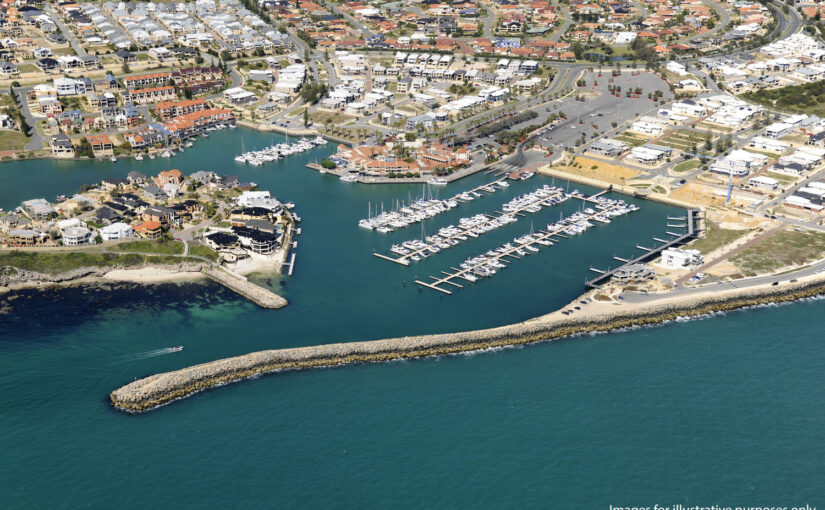
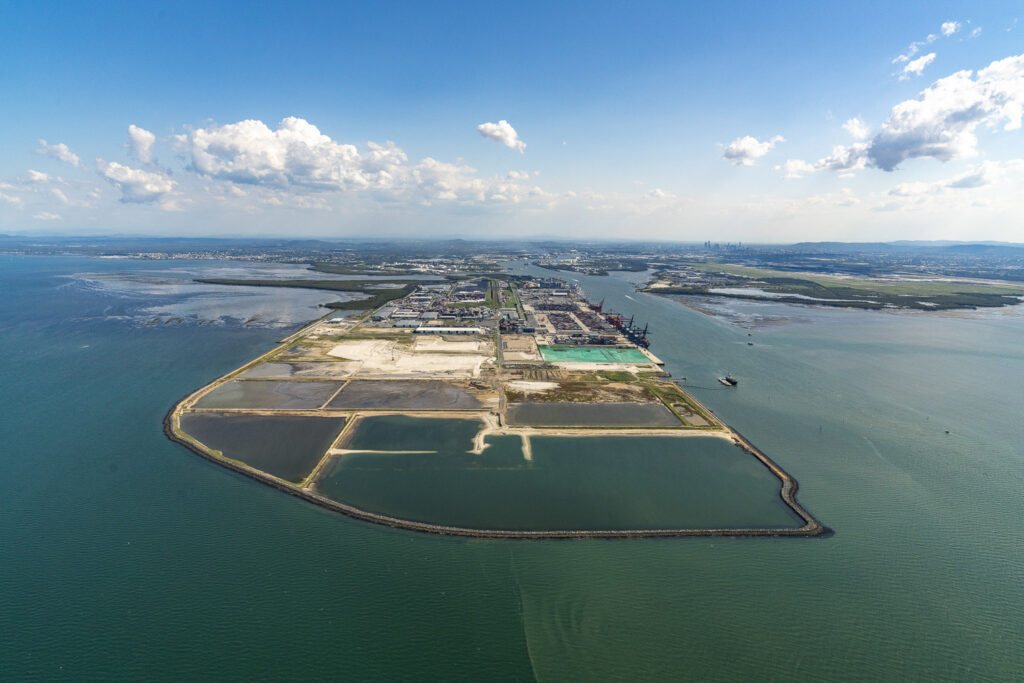
Mindarie Marina Aerial October 2013
4D Model (later renamed 12d Model) software has proven to be a “quick, powerful and effective tool” in the design disciplines required for the ongoing construction of Mindarie Keys, a major subdivision and marina development in Perth’s northern suburbs. Located about 30 minutes from Perth on the Sunset Coast, the development is an ongoing project of leading multidisciplinary engineering firm Sinclair Knight Merz (now part of Jacobs Group). The firm operates Australia-wide with offices in all capital cities and many regional centres, as well as in South East Asia, the Pacific, and Europe. The Perth office has a staff of more than 200.
The Mindarie Keys project has been underway for around 10 years and is expected to be finalised in another three to five years, with approximately 60 percent completed. The development offers some of Perth’s most attractive land, much of it overlooking the ocean and marina.
To date, the estate includes residential accommodation, a resort hotel, a marina, shopping centres, cafes and restaurants, and three primary schools. A private high school is currently under construction. Sinclair Knight Merz has been involved in the project since its inception.
The design for the subdivisions involves detailed bulk earthworks, roadworks, drainage, and services design to create attractive sites that maximise the varying terrain levels and views. According to project designer Steve Park, powerful software was needed to manage the large data sets required to optimise earthworks modelling for a project of this scale.
Initially designed for fast preliminary design of major roadworks, 4D Model is capable of handling projects in excess of 1,000,000 points, with 200,000 points already considered small to medium-sized. This capability was one of the key factors that attracted the firm to the software during its evaluation process.
“We were previously using a number of packages but with several large jobs coming up we wanted something which would handle more data intensive applications. We evaluated a number of packages then trialled 4D Model for a month. It met our needs and requirements, initially for the Mindarie Keys project, but then also for other large subdivision contracts we had,” Mr Park said.
“It is quick and very powerful for road design and intersections and we can put our drainage design into it to create the full model. We’re getting quicker and more accurate quantities and volume figures than before; it definitely makes the job easier. The fact that it handles such a large number of points makes it an excellent tool for large projects.”
“We no longer have to split large projects into sections, which made them more difficult to handle.”
According to Mr Park, 4D Model’s 3D interface simplifies planning of both surface and underground routes, helping identify conflicts with cables, pipes, and other services while improving perspective presentation.
“The interactive user-definable views allow us to work on any model very easily and provide immediate feedback at every stage of the design process. As all commands are transparent, our drafting personnel do not have to change models or open and close different parts of the program. A recalculation facility allows rapid redesign as modifications are made,” he added.
As well as producing earthworks quantities quickly using end area and exact methods, the software incorporates string and template design methods, providing flexibility across projects ranging from rural roads to multi-lane divided roads.
The software also supports:
Unlimited alignments
Special kerb return functions for intersections and roundabout design
Cut and fill analysis modules
Alignment, pipeline, and wastewater design modules
Custom project tasks through the 4DL programming language and extensive design function library
“Another major benefit has been the willingness of 4D’s developers to respond to our requests for particular features we may need for any jobs. There have been instances when we’ve asked for a feature and they have gone out of their way to build it in for us.”
“4D’s support and ability to respond immediately to our requests has been a significant advantage.”
Cardno MBK now Stantec, in partnership with Consolidated Properties Pty Ltd and contractor Robbie Marshall, leveraged the capabilities of 12d Model to successfully deliver the large-scale Casuarina Beach development in Australia while meeting demanding project timelines and complex design requirements.
12d Model was integral to the success of the Casuarina Beach project, allowing Cardno MBK (CMBK) to meet extremely tight deadlines by reducing the huge variety of calculations required on a project of this magnitude. One of the last ‘absolute beachfront’ sites earmarked for development on the Northern NSW Coast, Casuarina Beach will ultimately be home to more than 5000 people.
The development is the project of Consolidated Properties Pty Ltd, a Brisbane-based firm primarily involved in commercial developments. The supply of all engineering and environmental services was contracted to Cardno. The joint project is being developed by CMBK’s Gold Coast office and its Environmental Unit.
The Gold Coast office was charged with completing the designs, obtaining all Tweed Council and Authority approvals, and supervision of the construction for the infrastructure of over 400 lots and tourist resort sites, to be ready for release by mid-2001.
To achieve these deadlines, CMBK had to rely on creativity and innovation, along with the integration of advanced technology with responsive management. CMBK had successfully used 12d Model for earthworks and civil design on the Seabreeze Estate subdivision at Pottsville. The company was then confident in selecting 12d Model for the Casuarina Beach development.
As Civil Designer at CMBK, Robbie Marshall stated: “Software packages such as 12d greatly assist in meeting deadlines. The diversity and speed of 12d significantly reduced the huge variety of calculations required on a project of the magnitude of Casuarina.”
For the duration of the project, CMBK’s Gold Coast office was primarily involved in the engineering design of roadworks, drainage and trunk water mains; the design of over 4km of 200mm diameter sewer rising main; design and reporting on stormwater drainage systems for the overall development, adopting infiltration basins to complement piped and open channel drainage mechanisms; design of a sewerage reticulation system incorporating a regional pump station to benefit Casuarina Beach and adjacent developments.
The 12d Model modules catered for specific tasks involved in these functions, including such capabilities as the alignment module which uses cross-section templates and string design methods to produce roads, canals and other linear earthwork models. Cut and fill volumes are automatically produced for the design.
When adjustments are made to the alignment strings or templates, the 12d Model recalc option automatically removes invalid information and replaces it with the updated geometry and volumes.
According to Robbie Marshall, this is particularly useful when designing roads, swales, storage ponds or any situation where a number of trials are needed to determine the best position for final alignment. The drainage module supports the display of drainage networks, typically those required for new land subdivisions and development projects such as Casuarina Beach. The drainage string itself consists of manholes, joined by straight or curved pipes. Invert levels and pipe grades can be set or modified graphically or by typed input. Manhole and pipe sizes are also user definable.
Robbie explained that earthwork volumes for trenches can be calculated along the selected design line. “The bulk earthworks modelling for Casuarina was carried out using 12d,” he said. “It was an immense task over the 38-hectare site but was significantly simplified using the software.”
Use of the Volumetrics and TIN Analysis capabilities allows calculation of earthworks volumes within a user defined polygon using either end area or exact calculations. Reports of cut and fill areas and volumes are given on a section-by-section basis using the end area method or on a depth basis using prismodial volumes. Depth volumes can be colour coded for validation and plots.
The integration of these features has allowed CMBK to meet its selection criteria. Robbie explained that CMBK wanted to “increase productivity without reducing quality in the design and documentation of urban developments and civil infrastructure projects”.
Highlighting specific features which CMBK found particularly valuable, he cited the increase in speed of road designs due to the fact that preliminary designs could be simply recalculated with the use of template files; time saved using the kerb function; and the string-based design software which allows accurate finish profiles to be obtained.
He added that the software has good interaction with other packages and was easy to learn and to use, even for the non-computer literate.
At Port of Brisbane Corporation in Queensland (https://www.portbris.com.au/), the versatility of 12d Model was showcased through its critical role in dredging, terrain modelling, and infrastructure design for the landmark Fisherman Islands expansion project.
4D Model (later renamed 12d Model) software is proving to be equally at home on water as it is on land.
The Port of Brisbane Corporation is proving the flexibility of 4D Model by using it for volume checking, contour checking and road design on its development at the Fisherman Islands.
Fisherman Islands is located at the mouth of the Brisbane River. The area was a group of four islands which have been joined by reclamation. Over a 20-year period Fisherman Islands has been developed into one of the most modern container and bulk handling ports in the world.
The site has already out-grown its original land and future expansion has been provided for with the recent reclamation of more than 70 hectares using material dredged from the main access channels in Moreton Bay and the Brisbane River.
This reclamation involved moving 2.6 million cubic metres of sand using the Pearl River dredge which was contracted from Holland. The massive amount of material was to be shifted in 10 weeks.
4D Model was used to calculate pre- and post-dredge volumes. These volumes are used to measure the amount of sand moved and provide the data for the $16 million payment to the dredging contractors.
4D Model is also used to provide 3D views of the Brisbane River bed.
“4D Model provides us with dynamic views of the river bed which permit the observer to clearly understand its profile,” said a Port of Brisbane Corporation draftsman.
The nature of the work carried out by the Port of Brisbane Corporation highlights 4D’s use as a general purpose civil engineering tool. The software can effortlessly provide volume calculations for roading, dredging or landfills.
Engineering surveys are carried out by the Corporation’s surveyors using Total Station equipment. The surveyors process this data using Geocomp and send the resulting information by modem to a network of Digital workstations which run the Ultrix operating system and 4D Model.
“All that data is imported into 4D for checking contours, terrain modelling and volume calculations,” the draftsman said.
4D Model has also been used in the design of a service road network, as well as a major access road and an open drain on the Moreton Bay side of Fisherman Islands.
“The biggest benefit of 4D Model is its speed, accuracy and ease of use. It is powerful and can be programmed to do what you want it to do. The other very big factor is the local support; if you have a problem you can get it fixed very quickly.”
Port of Brisbane draftsmen said while 4D Model is not in use every day, the five members of the CAD unit can turn to it as required and quickly complete their work because of its easy-to-use graphical user interface.
WSP in Victoria, Australia (https://www.wsp.com/en-AU) has been involved in a number of infrastructure projects, working alongside various clients and contractors, including David Rotton, to deliver coordinated engineering solutions.
Parsons Brinckerhoff has been involved in a number of large-scale, high-profile projects covering the design of roads, drainage, sewer, water, and other associated infrastructure, as well as bulk earthwork modelling. Their project teams used 12d Model software to address a range of complex and non-standard challenges, often requiring innovative and customised solutions. Given the scale and nature of these projects, they also needed to collaborate closely with multiple consulting engineering companies, which meant their chosen software had to interact seamlessly with different design platforms used across project teams.
A key requirement was the ability to check clearance and identify potential clashes between services designed in 12d Model and those produced in other software packages. However, limitations in compatibility between import and export formats across platforms meant that alternative methods had to be developed to enable reliable data exchange between systems. This was particularly important for transferring three-dimensional pipeline data elements across drainage, sewer, water, and related services. In addition, the team explored new applications of 12d Model by successfully modelling complex electrical and chemical box culvert systems, which had not previously been attempted.
To address these challenges, detailed working procedures were developed, including step-by-step guides to support consistent data transfer across project teams. These processes enabled 12d Model to export data in .csv format in a structure that could be read by other software, as well as import .csv data generated externally back into the model environment. A custom macro was created to extract three-dimensional pipe data from 12d Model and export it into .csv files for use in other platforms. Electrical and chemical box culverts were modelled using an adapted approach based on drainage strings, with the Drainage Network Editor used to define culvert height and width. The Drainage Plan Plot function, supported by a modified plot parameter file, was then used to represent the culverts with accurate internal geometry, enabling effective service clash detection directly within 12d Model.
Through the use of 12d Model software and these tailored workflows, the team was able to overcome a range of complex and non-standard design challenges across very large projects. This approach also supported effective collaboration with multiple consulting engineering companies, ensuring smooth interaction between 12d Model and the various design software platforms used across project stakeholders.
Working with the Ministry of Education, New Zealand, Gary Pidd Architect Ltd now Studio 26, adopted 12d Model and modern surveying technology to transform the delivery of a large-scale school database project, improving efficiency and accuracy across more than 200 school sites nationwide.
New Zealand firm Gary Pidd Architect Ltd has jumped on the cutting edge of technology with its innovative use of 12d Model for an ongoing project to build a database of over 200 schools.
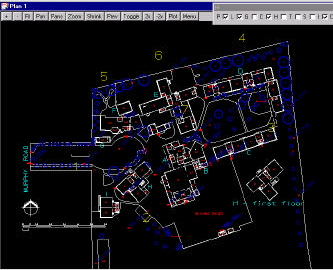
The project involves surveying each site and recording all buildings and features such as paving, ramps, trees, play equipment, covered ways, car parking facilities, sealed areas, and grass areas. This information is then converted into DWG files for supply to the customer.
The firm had previously won a smaller contract to survey schools, but had completed this by hand. When competing for this larger contract, Gary Pidd Architect investigated modern equipment to see what it could do for them.
True first-time users, the firm had not previously used any surveying software, and had only used manual theodolites.
Mr Pidd initially found the New Zealand distributor for 12d Model on the Internet using a search engine. Sokkia in Wellington gave the firm a demonstration of Sokkia instruments and 12d Model software. Mr Pidd was impressed right from the outset. “With Sokkia, we went to a school site, took some measurements, then went back to our office and downloaded it straight onto our computer from the data recorder,” he said.
“We wanted a system which functioned so that when we coded the data in the field, it was automatically given colours, linestyles, symbols such as trees and flagpoles at points when downloaded and reduced. With no extra work, it was then all there as a basic outline of the school!”
Other choices of equipment for the contract included an aerial photograph system and GPS, which Gary Pidd Architect discovered couldn’t give them the accuracy they needed for this job. Using a Practise Version of 12d Model combined with the intended use of Sokkia instruments, the firm put together their proposal, and their chosen methodology won them the contract.
The company has completed plans for 20 schools to date, and estimate the project will take about 9 more months to complete. They have calculated the amount of time saved using 12d Model rather than previous methods as being around 20%!
“The program is so tailorable,” Mr Pidd said. “You don’t have to know all the codes that are in there; just use the one system that you have set up! It’s brilliant! Some of the sites have up to 400 measurements, yet you come back into the office with them, and 15 minutes later, there you are with a plan!”
Another aspect of this modern technology the firm found particularly helpful was the ability to download data files on-site, and email them back to their main office. “Some of the schools are miles away, so this is a great feature for us,” said Mr Pidd.
The firm plans to use 12d Model on all future work. In the words of Mr Pidd, “We will never use just the old theodolite equipment again!